Chemify
Project Overview
The Chemify project, also known as Chemifarm, is the world’s first fully automated facility for molecular design and synthesis. Taylor and Fraser transformed an empty 21,500 sq. ft. warehouse into a purpose-built pilot plant, integrating AI, robotics, and a universal chemical programming language to digitise chemistry.
The facility accelerates discovery and manufacture of new molecules for pharmaceuticals, materials science, agriculture, and green energy, with five lab bays and two specialist lab spaces designed for biomedical research.
Client
Ryden
Location
Maryhill, Glasgow
Programme Duration
24 months
Taylor And Fraser Role
Principal Contractor
Taylor and Fraser Role
Taylor and Fraser delivered a turnkey solution, working closely with the design team, client, and end users to create:
- Purpose-built plant area
- Clean rooms
- External switchroom and mezzanine deck
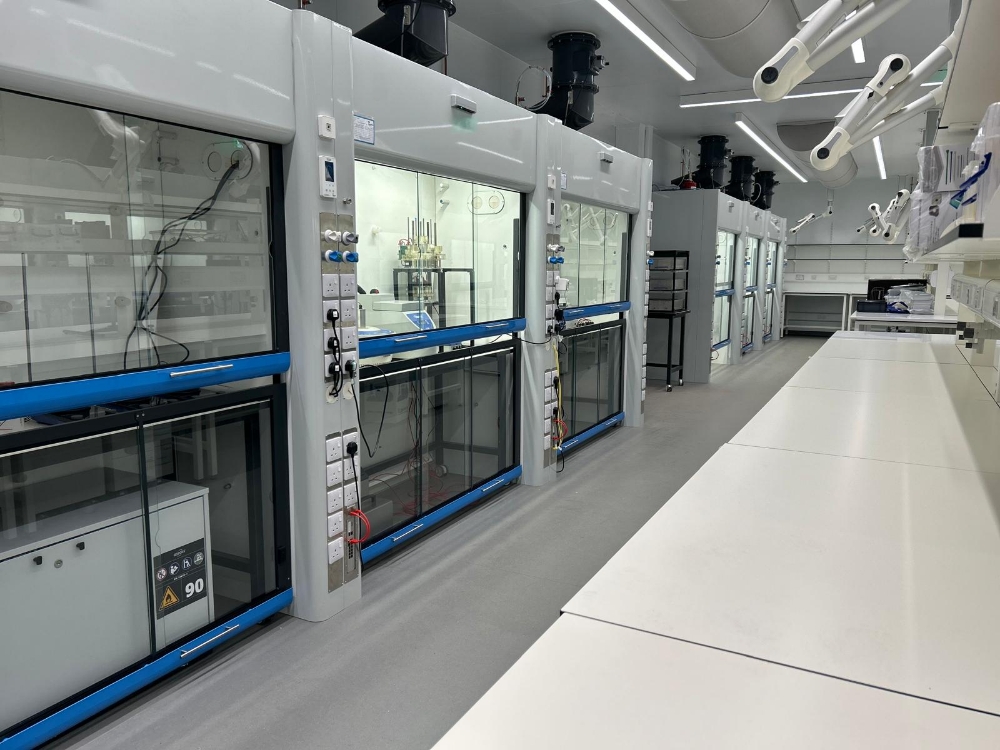
- 29 fume cupboards and cutting-edge lab equipment
- Power distribution, ATS, standby generator, and small power systems
- Fire alarm, data, CCTV, and access control systems
- HVAC: air source heat pumps, split A/C units, AHUs, fume extract systems
- Specialist gases management
- BMS integration
- Commissioning
- Maintenance



Key Challenges
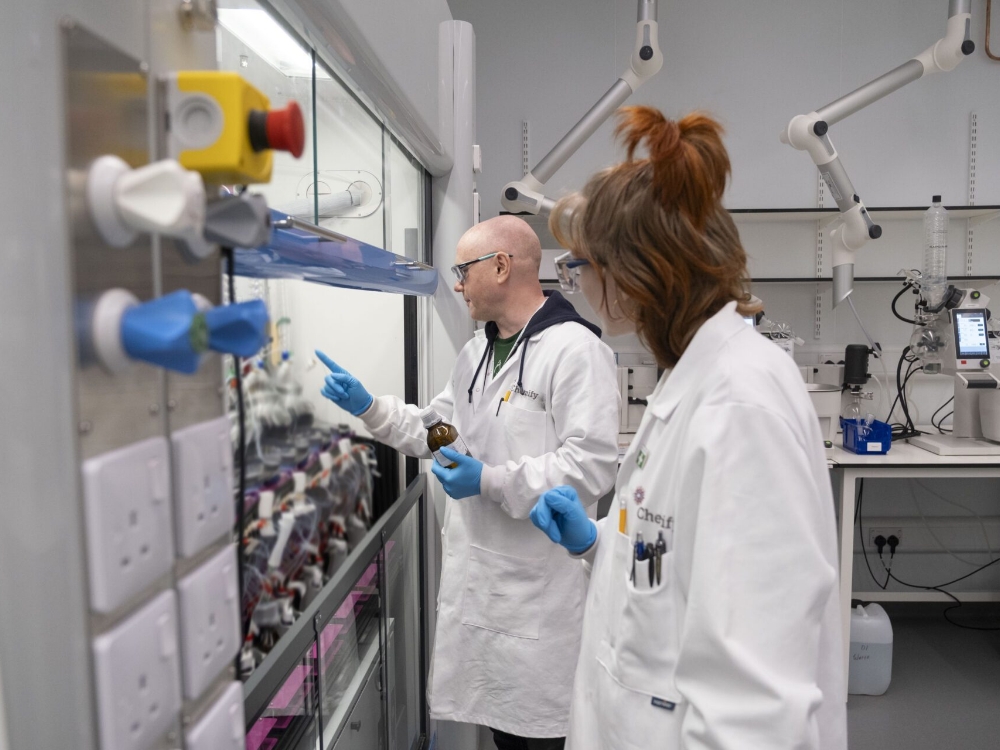
Delivering Chemifarm required precision engineering to enable optimum use of robotics in a laboratory setting.
The facility needed highly adaptable containment and HVAC systems to manage chemicals that had never been synthesized before. Balancing “clean” human workspaces with automated zones demanded complex air-pressure management to prevent cross-contamination. As the first facility of its kind, there were no existing global standards for AI-controlled chemical factories. Design changes during construction were frequent, requiring Taylor and Fraser to remain agile and coordinate closely with the supply chain and end users to keep the project on time and within budget, while navigating complex health and safety regulations.
Our Approach
Our team took a collaborative approach between the client, design team, supply chain, and end users.
We used a direct-hire workforce to maintain quality and consistency and implemented weekly reviews to track design and schedule changes. BIM was used for clash detection, ensuring systems could be installed without disruption.
Regular coordination and flexible planning allowed the team to adapt construction sequencing as scientific discoveries emerged during the build.
The Outcome
Chemifarm was delivered on time and to budget, creating a world-leading automated lab facility for 150 employees.
The project has been hailed as a “stand-out success story” for Glasgow’s innovation economy, supporting commercial partnerships, research collaboration, and continued growth in life sciences.